FIELD RESEARCH
Lëpushë, Budaçe and Vermosh
Kelmend (Albanian Alps)
An activity developed by GO2 Albania in the context of Tramontana Network, a Creative Europe project, co-funded by the European Union.
Life in the mountains has never been easy. Even less so for the older generation, those aged seventy to ninety, who were born and have lived their entire lives in the deep, isolated villages of the Albanian Alps, where time passed far too slowly compared with the rest of the world. Although it may seem boundless from the mountain ridges – the first to be kissed by the sun – the people’s true lives were confined to the gorges of the valleys where they chose to build their homes.
For most of the year, their lives revolved between the house, the land, the water and the livestock, while during the three to four warm months, they were divided up like the families: the majority in the mountains, to graze the livestock, and the others in the valleys, where the house and land required daily care.
Such was the life of the mountain people in Lëpushë, Budaçe and Vermosh, the three new settlements of Kelmend, in the western part of the Albanian Alps. They had come respectively from the “mother” villages – Vukli, Nikçi – Broja and Selca, the new mountain people continued the old rituals of their ancestors, but with the hope of a better life, because here there were more opportunities.
The opportunities were two vital elements: land and water. The rest was up to them, and that was the work. A daily, persistent labour to break a patch of land, to bring water from the spring or stream, to increase the number of livestock.
This was the daily life of those generations in the new settlements, which until 35 years ago were bustling with people. Now that living conditions have changed beyond imagining, they are left to live on the memories of that time – which, despite the hardships, remains a happy one
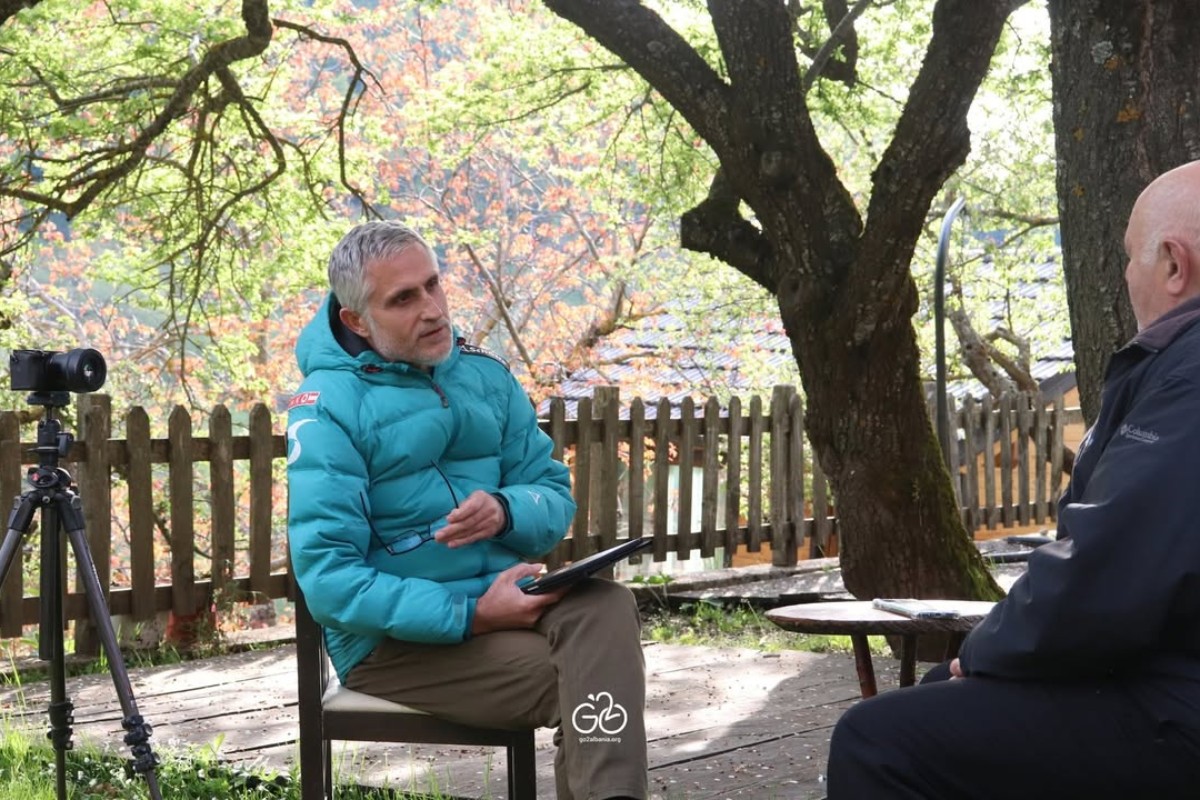
The testimonies of these people you see in the photographs, focusing on water-use practices, livestock rearing and mountain migration, as well as the rituals of daily life, have been recorded on audio and video to preserve their memories. Furthermore, as part of the laboratory work, they will be catalogued along with the intermediate data (metadata), and will be included in the inventory of oral histories collected by GO2Albania over a now ten-year period of commitment to documenting cultural heritage, material and spiritual heritage in the Albanian Alps. A portion of the recordings will also form part of the digital archive created by the Tramontana Network project.


