GREGGE ROMANE. POEMA
Book presentation and publication
26th of april, 2025 | 5:00 p.m.
La Corte di Arenaro
Torrimpietra, Fiumicino
Rome, Italy
An event hosted by Bambun APS as part of the Tramontana Network project.
The presentation of the book “Gregge romane. Poema”, edited by Elio Di Michele, Giampiero Giamogante, and Roberta Tucci, with a preface by Gianfranco Spitilli and an afterword by Giovanni Kezich, published by Bambun/Centro Studi Don Nicola Jobbi in December 2025, will take place at La Corte di Arenaro in Torrimpietra, starting at 5:00 p.m., coordinated by Egildo Spada, with contributions from Ernesto Benelli, the book’s editors, and improvisational poets.
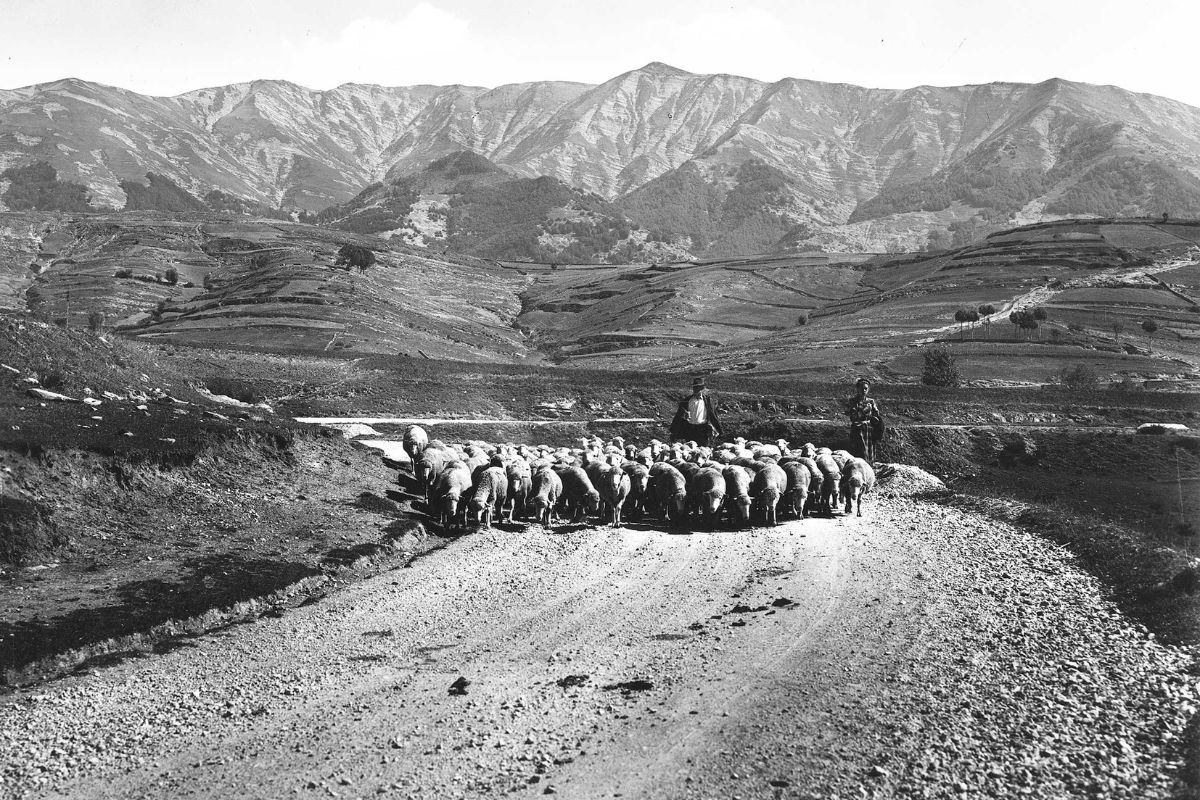
“In 1942 – writes Roberta Tucci –, Agostino Annibaldi, a shepherd from Poggio Cancelli (AQ) who moved his flocks to the Roman countryside, completed his remarkable poem in hendecasyllables, “Gregge romane”: a unique work, comprising over two thousand five hundred verses divided into twelve chapters, in which the author distills all his knowledge and experience as a sheep farmer rooted in a family and regional context deeply tied to sheep herding”, combined with an extraordinary, personal poetic flair. “The poem traces the experience of the transhumant shepherd throughout the entire year, following the changing of the seasons: the ascent to the mountain pastures, with its route, dangers, and customs of rest stops, and reunions with families; mountain grazing; sheep breeds; the herding centers between Abruzzo and Lazio; summer grazing; winter grazing; the lease agreements; the organization of the farm; sheep diseases; the descent from the mountains with the arrival in the Roman countryside; births; shearing; cheese and ricotta production; music, dance, and religious observance.
While Agostino Annibaldi’s biography remains partly obscure, […] cut short by the tragic conclusion of his death in 1944 following a wartime event, “Gregge romane”, hitherto almost entirely unpublished, is finally brought to light and offered to the reader as a ‘classic’ of Apennine pastoral civilization”.