COMMUNICATING INTANGIBLE HERITAGE
Giulianova (TE), Abruzzo, Italy
LEM-Italia Association
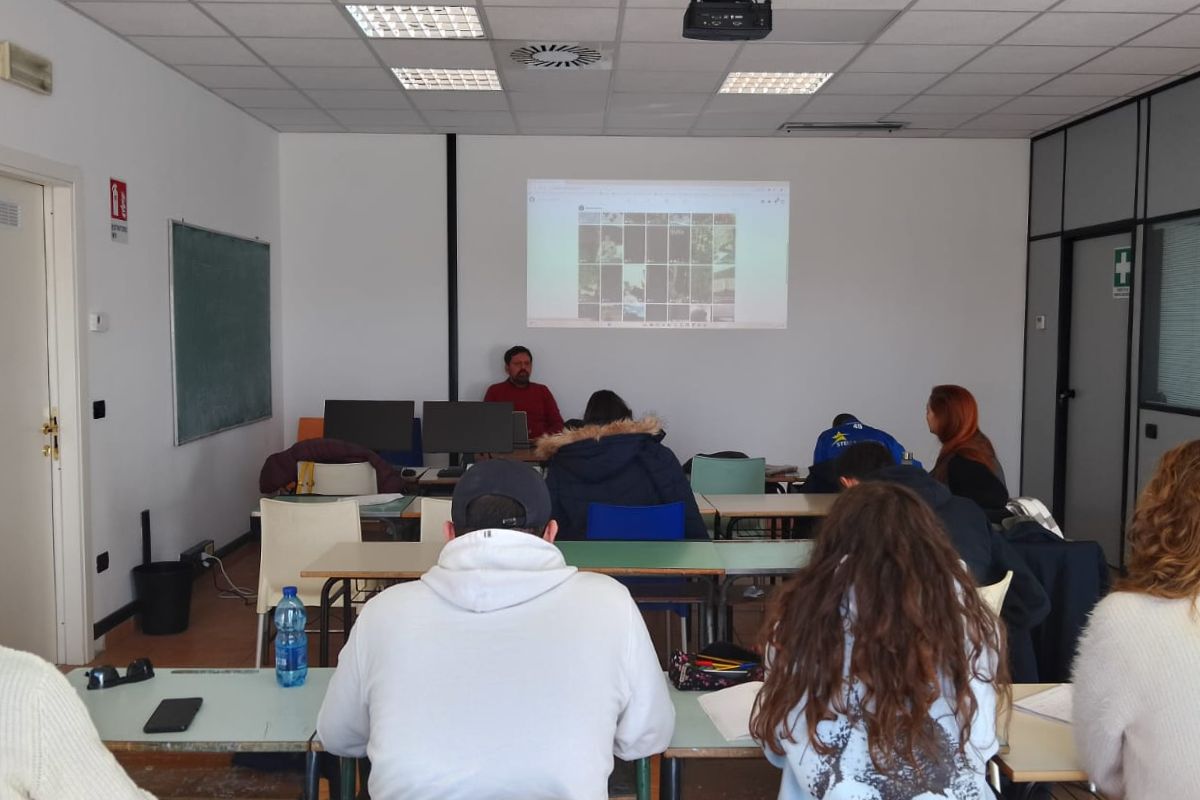
From 9 to 11 December 2025, the first training cycle promoted by the LEM-Italia Association took place in Giulianova, as part of the SEMINA activities of the Tramontana IV project.
The three sessions, addressed to the students of the Higher Technician Course for the Digitalization of the Cultural and Creative Industry – Digital Marketing and Communication of the ITS for Tourism and Culture – ITS Academy of Giulianova, aimed to share with young participants the practical experience of the Tramontana Network. In particular, the meetings highlighted actions and strategies that can transform intangible cultural heritage into a territorial asset and an economic resource, also through tourism-oriented initiatives.
The training course focused on three main objectives:
• Encouraging the design of concrete actions – such as digital campaigns, social media content, and tourism experiences – aimed at enhancing intangible cultural heritage;
• Stimulating reflection on the role of digital tools in intergenerational knowledge transmission, community engagement, and the creation of new cultural and tourism products;
• Developing digital marketing and communication skills applied to intangible heritage: storytelling, digital inventories, immersive experiences, community involvement, and sustainable tourism. In this framework, the presentation of the GICH – Gran Sasso Laga Intangible Cultural Heritage project proved particularly significant.
Thanks to the contributions of the Tramontana partners Go2Albania (with an intervention by Eltjana Shkreli) and Binaural Nodar (with the participation of Luis Gomes da Costa), students were able to observe how different disciplinary approaches—ranging from more technical perspectives such as historical, anthropological, architectural, and sociolinguistic studies to more conceptual and emotional ones such as artistic interpretation—can start from an in-depth reading of the territory to develop new possibilities for conscious and innovative engagement. These approaches can attract diverse audiences, from children to adults, fostering immersion, participation, and shared experiences.
Finally, the contribution of the associated partner ITACA for local development highlighted how knowledge of European policies and project-planning techniques can effectively respond to the needs of small territories, connecting them to one another and to an international dimension capable of attracting the necessary resources.


