ATELIER ERA SENT JOAN
The rituals and sounds of the feast of St John
Led by Mathieu Fauré and Marco Farré-Barthe
1 June 2026
Orgibet (Ariège)
An initiative of Eth Ostau Comengés as part of Total Festum / Festival Tramontana, co-funded by the European Union’s Creative Europe programme.
St John’s night, Era Sent Joan, has a unique character in the Pyrenean valleys of Comminges and Barousse. Inscribed on UNESCO’s list of intangible cultural heritage, this fire ritual is inseparable from a wild and ancestral soundscape.
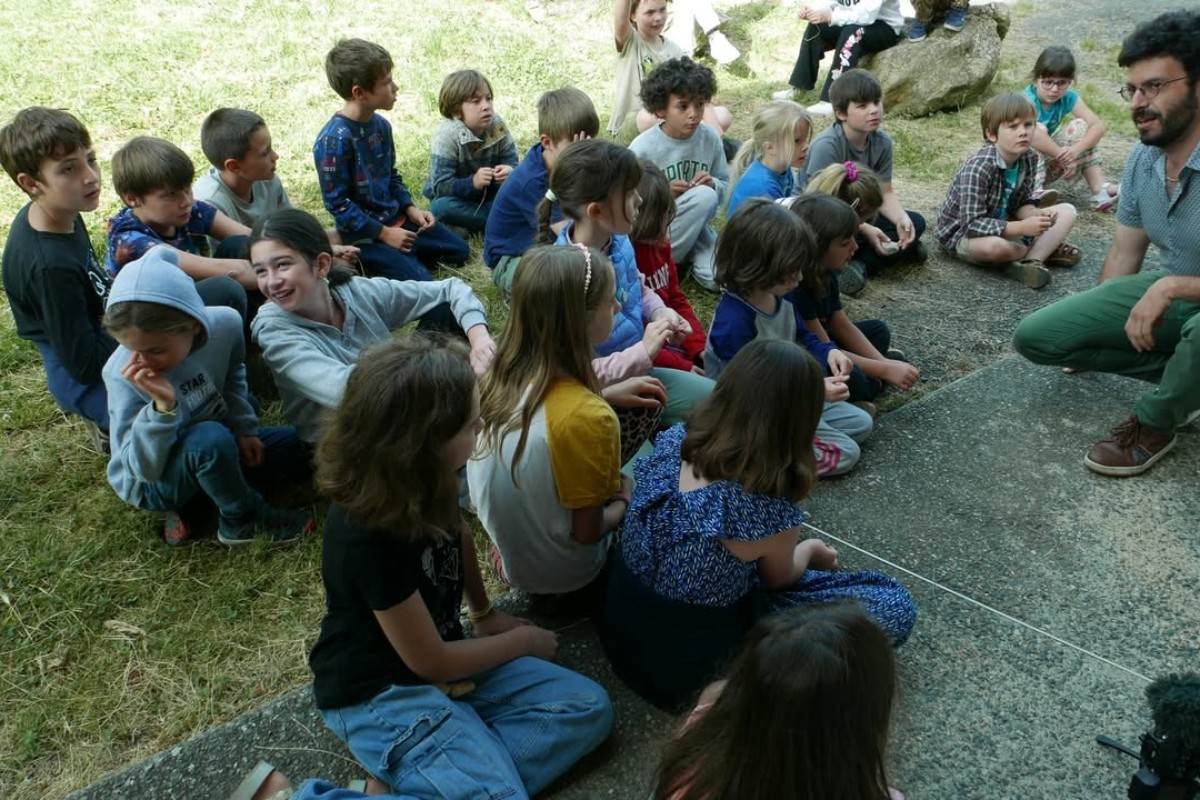
The Era Sent Joan workshop, organised by Eth Ostau Comengés, covered the following aspects of the festival:
At the heart of the ritual is the building of the fire pole, called the brandon (or haro). Erected months in advance on the village square or on a ridge, it is made in subtly different ways from one community to the next. This vertical pole becomes the beacon around which the village gathers to celebrate the summer solstice.
Before the fire crackles, children and shepherds set the sonic scene by making ephemeral instruments from local plants. Hollowed elder stems, canes or simple ivy leaves slipped between the lips become plant whistles.
As the sun goes down, the landscape fills with deep, low vibrations. This is when the foghorns and cattle horns (las dornas) sound. Traditionally used by shepherds to communicate from one valley to another or to guide the flocks in the fog, these horns are cleaned, pierced at the tip and sometimes fitted with a wooden mouthpiece. Their powerful, guttural sounds cut through the night to announce the start of the festivities and, according to old beliefs, to drive evil spirits from the summits.
More surprising still in the heart of the mountains, the use of large sea shells, the conches (eths couquiles or mactres), is a central sound element of Era Sent Joan. Introduced centuries ago through transhumance and exchanges with coastal areas, these sacred tritons or helmet shells demand powerful breath. The sound they produce is a long, solemn and remarkably far-carrying lament that echoes against the rock walls of the Barousse valleys. This dialogue between sea shell and mountain gives the ritual an almost mystical dimension.
At midnight, the fire pole is finally lit. The crackling of dry wood and the bursting of pockets of resin mingle with the joyful din of the villagers. Plant whistles compete with the lowing of the horns and the song of the conches, creating a true ritual cacophony. Around the burning brandon, Occitan polyphonic songs rise and the young people leap over the dying embers.


