CODOR, THE GREEN MAN
Pentecost 2026
Field Research by ORMA (Romania)
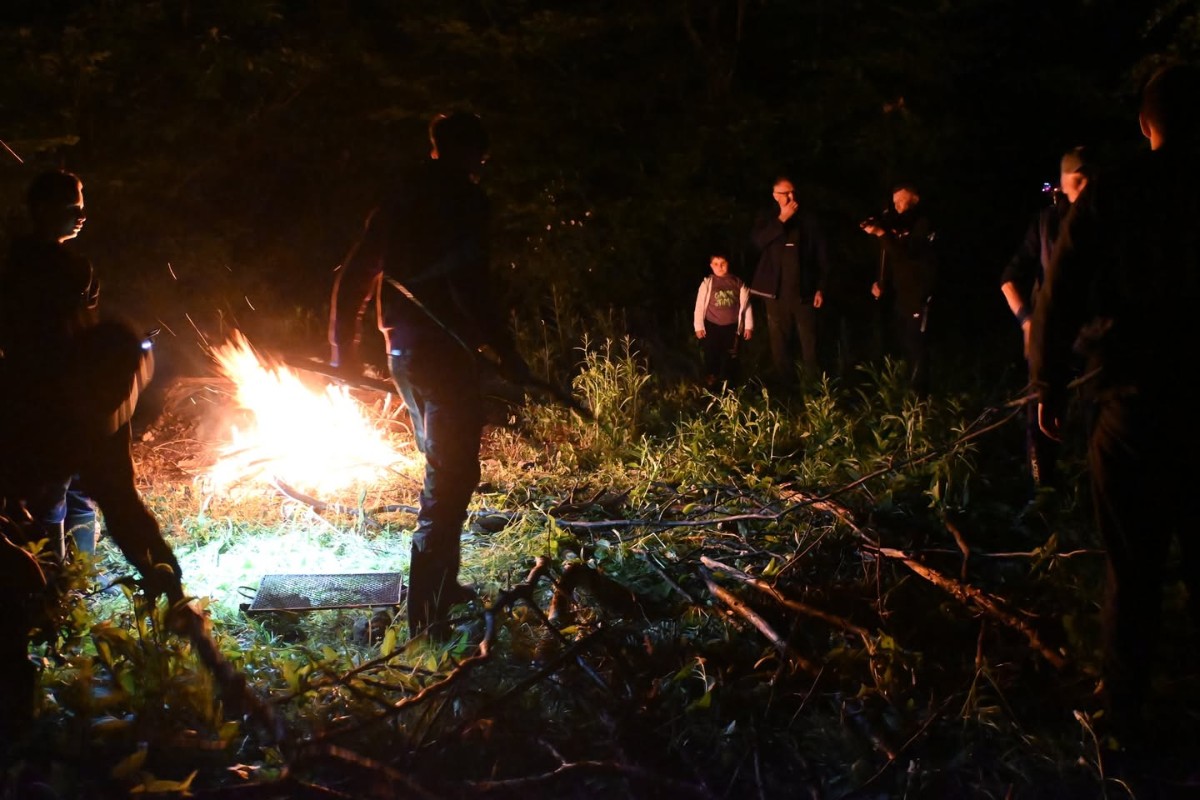
The custom of young men dressed in wild cherry bark (Goțoii) and foliage (Păpălugăra) on the eve of and on the day of Pentecost, celebrated according to the Byzantine rite, attests to the survival in the village of Codor of an archaic variant of the European Green Men tradition. On the night preceding the ritual, the young men gather in a forest clearing on the outskirts of the village, where they keep vigil together around a fire, sharing food, drink, music, and wakefulness in preparation for the ceremonial procession of the Green masks. Clad either in wild cherry bark, accompanied by a variable number of “soldiers,” or entirely covered in leaves, they process through the entire village, following the pattern characteristic of traditional springtime ritual visitations.
Young women are traditionally excluded from this woodland retreat. The custom is exclusively male and belongs to the sphere of rites of passage, constituting one of the stages in the initiation of adolescents into the village youth company.
As darkness falls on the summer evening, the young men travel to the designated clearing—always the same one from year to year, nowadays by car—where they gather around a bonfire with food, drink, and music. In earlier times, music was performed live or played on a radio or cassette recorder; today it usually comes from playlists streamed from mobile phones connected to portable speakers. An essential element of the vigil is remaining awake throughout the night. Formerly, anyone who fell asleep was punished by having his feet tied together and being beaten on the soles of the feet. In 2026, however, a torrential rainstorm forced the ten participants to crowd into the cab of the tractor that had brought them and their trailer to the clearing.
At dawn, the group departs by tractor to collect wild cherry bark from a location some distance from the camp. Large sheets of bark are cut and fashioned into helmets, belts, wrist guards, and greaves, while the youngest participants gather branches and foliage for the leafy Green mask. Although enough leaves were collected to prepare several Păpălugăra figures, only a single leafy character was ultimately assembled. The dressing of this figure is carried out by married men—the generation of the young men’s fathers. The preparation of the costumes occupies the entire morning.
At approximately 2:00 p.m., the procession sets off toward the village. The first stop is at the stream running the length of Codor, where the participants immerse themselves completely in the water. At the first household they visit, they thoroughly soak their bark helmets once again. This serves a dual purpose: it prepares them for the water splashing that accompanies the procession while preventing the bark costumes from drying out and becoming brittle, ensuring that the vegetal attire remains supple throughout the heat of the Pentecost afternoon.
The procession then advances through the village with careful attention to local etiquette. The masked performers enter only those households where they are expected and splash water only where they know their actions will be welcomed. In the past, however, such behaviour formed part of a shared ritual understanding, and no one was expected to take offence regardless of how thoroughly they were soaked. At each household they receive the customary gifts of money and drink, while at designated stopping places they are also served freshly prepared food.
Once the circuit of the village has been completed, the young men gather for a final series of photographs, first wearing their masks and then without them. They carefully count and divide the money collected during the procession, distribute the bark helmets to the village children, and finally withdraw to continue celebrating together for the remainder of the day.
In 2026, the custom took place on Pentecost according to the Julian calendar, on 31 May 2026. Fieldwork was carried out by Ileana Benga and Bogdan Neagota.
The custom in Codor has previously been documented during ORMA field expeditions in 2005 (by the same research team), 2009 (Bogdan Neagota, Ileana Benga, and Georgian Sas), and 2025 (Bogdan Neagota).


